Choosing the right metal fabrication process is an important step when manufacturing custom metal components.Different materials, thicknesses, shapes and production quantities require different processing methods. Selecting the appropriate combination of processes can improve dimensional accuracy, production efficiency and overall cost.
Here are several common metal fabrication processes and their typical applications.
Laser Cutting:Laser cutting uses a concentrated laser beam to cut metal according to a digital design.
It is commonly used for:
* Steel plates
* Stainless steel sheets
* Aluminum plates
* Brackets
* Embedded components
* Custom metal plates
Laser cutting is particularly suitable for components with complex outlines, slots and holes.For custom production, digital drawings can be used to control the cutting geometry and maintain consistency between different batches.
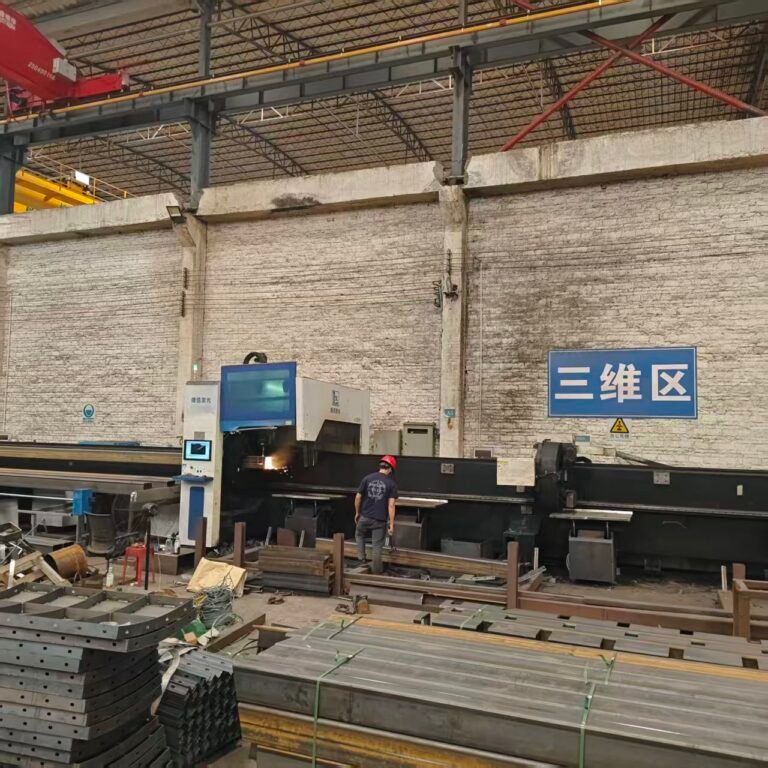
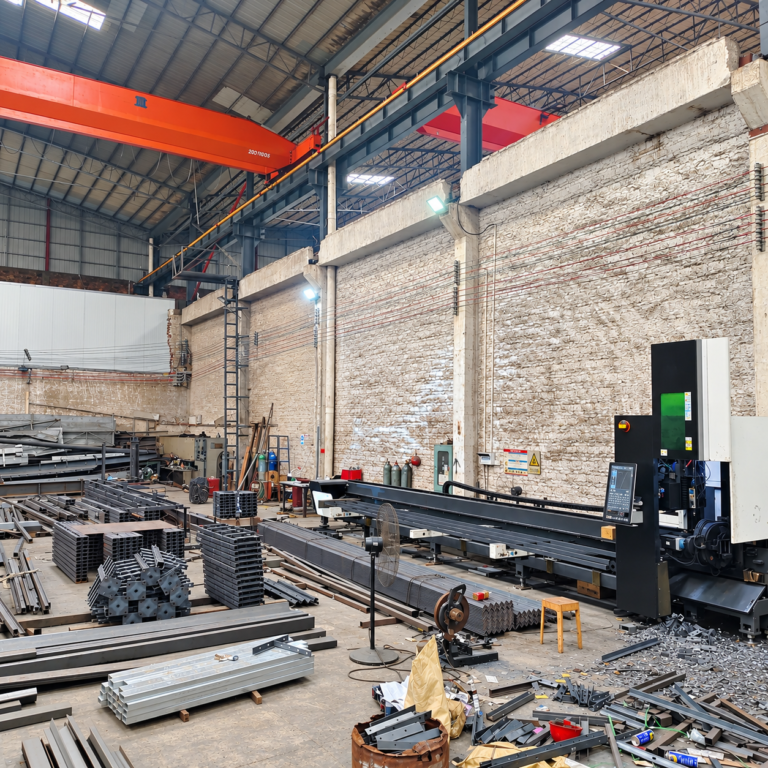
Tube and Profile Cutting:Metal tubes and profiles often require additional processing before they can be assembled into a finished component.
Tube laser cutting can produce holes, slots, angled cuts and other shapes directly on tubes and profiles.This process is useful for applications such as frames, supports, structural components and equipment parts.Compared with traditional manual cutting, automated tube cutting can improve consistency and reduce secondary processing.
Metal Bending:Bending changes the shape of a flat metal sheet without removing material.
It is commonly used for:
* Brackets
* Covers
* Channels
* Mounting components
* Structural plates
The required bending angle, material thickness and bend radius should be considered during design.For production involving multiple identical components, CNC bending can help maintain consistent dimensions.
Punching:Punching uses a mechanical or hydraulic press to create holes and shapes in metal.
It is often suitable for repetitive production where components contain standard holes or patterns.The choice between punching and laser cutting depends on factors such as material thickness, design complexity, quantity and production cost.
Welding:Welding joins two or more metal components together to create a finished assembly.
Common applications include:
* Steel frames
* Supports
* Brackets
* Fabricated structures
* Equipment components
The welding process should be selected according to the material and structural requirements.Good welding practice is important not only for strength but also for dimensional stability and final appearance.Combining Multiple Processes.In many projects, one fabrication process is not enough.
A custom component may require:
Laser Cutting → Bending → Welding → Inspection
Another product may require:
Tube Cutting → Drilling → Welding → Surface Treatment
Combining different processes allows a manufacturer to produce more complex components while reducing the need to coordinate with multiple suppliers.
How Does the Material Affect the Process?
Material type and thickness have a direct influence on the fabrication process.
For example, carbon steel, stainless steel and aluminum have different physical properties and therefore require different cutting, bending and welding parameters.
The manufacturer should evaluate the material before production and select suitable processing methods based on the engineering requirements.
How Does Order Quantity Affect Process Selection?
Production quantity is another important factor.
For small custom orders, flexible processes such as laser cutting may be more practical because they can accommodate different designs without requiring extensive tooling.
For larger quantities, automated or dedicated processes may provide better production efficiency.
Therefore, the best process is not necessarily the same for every order.
Conclusion:
Selecting the right metal fabrication process requires consideration of the material, thickness, geometry, tolerances, quantity and final application.Laser cutting, tube cutting, bending, punching and welding each have their own advantages. In many custom projects, the best solution is a combination of several processes.By reviewing the engineering drawings before production, a manufacturer can determine the most appropriate fabrication method and help achieve the required quality and cost efficiency.