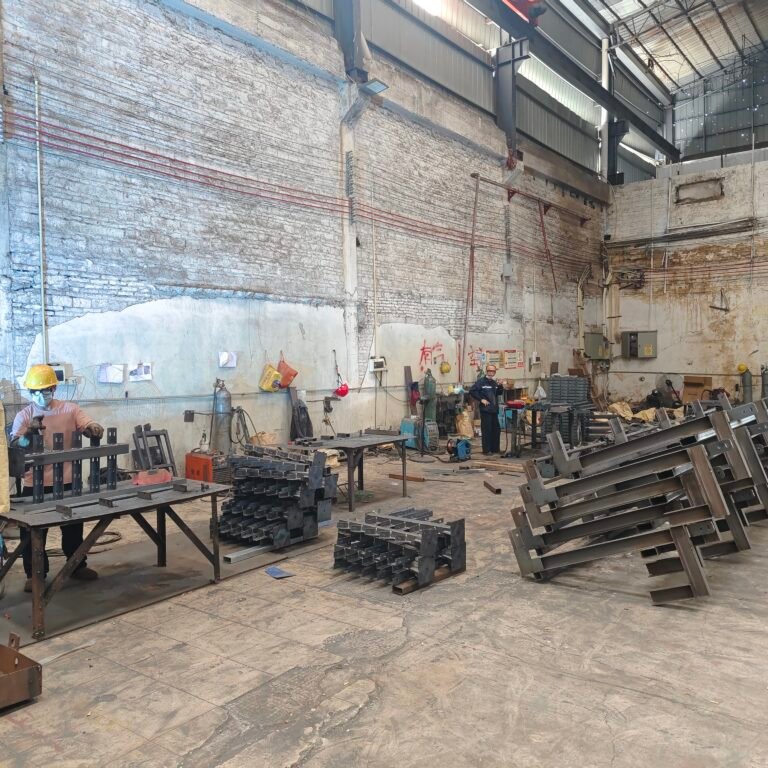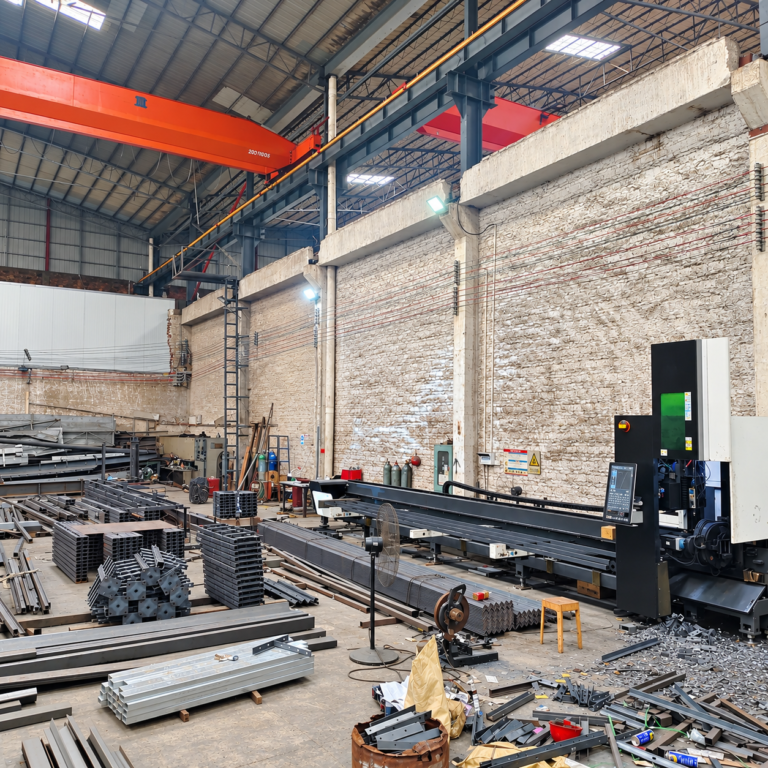
China is an important manufacturing base for custom metal components, serving construction, engineering, infrastructure, equipment and industrial projects around the world.However, finding the right manufacturer is not simply a matter of comparing prices. For custom metal components, production capability, drawing interpretation, quality control, communication and delivery are all important factors.Here are several points overseas buyers should consider when sourcing from China.
1. Check the Manufacturer’s Actual Fabrication Capability
A supplier may offer many products, but this does not necessarily mean that it manufactures them directly.For custom metal components, buyers should understand what fabrication processes are actually available.Important capabilities may include:
* Laser cutting
* Tube cutting
* Bending
* Punching
* Drilling
* Welding
* Assembly
A manufacturer with multiple in-house processes can reduce the need to coordinate between different suppliers.
2. Can the Manufacturer Work From Engineering Drawings?
Custom manufacturing usually starts with a drawing or technical specification.The manufacturer should be able to understand dimensions, tolerances, material requirements, hole positions and fabrication details.A proper drawing review before production can identify potential manufacturing problems and reduce the risk of producing components that cannot be assembled correctly.
3. Material Requirements Should Be Clearly Defined
Material specifications should be confirmed before production.For example, a project may specify a particular grade of carbon steel, stainless steel or aluminum.The buyer and manufacturer should agree on the material specifications before production begins. This helps avoid misunderstandings and ensures that the finished components are suitable for their intended application.
4. Consider Production Quantity
Not every manufacturer is equally suitable for every order size.Some factories mainly focus on high-volume production, while others are more flexible with custom and small-batch orders.If your project requires a relatively small quantity of customized components, it is worth confirming the manufacturer’s minimum order requirements before placing the order.
5. Ask About Quality Inspection
Quality control is particularly important for components manufactured according to drawings,Depending on the project, inspection may include:
* Material verification
* Dimensional inspection
* Hole position inspection
* Bending angle inspection
* Welding inspection
* Surface inspection
* Final quantity verification
The inspection requirements should be agreed before production whenever possible.
6. Communication Is Part of the Manufacturing Process
For overseas projects, communication can have a direct impact on production.Technical information may need to be clarified through drawings, dimensions, photos or written specifications.A manufacturer that can communicate clearly about technical details can help reduce misunderstandings during production.
7. Packaging and International Delivery
Custom metal components can vary significantly in size and weight.The packaging method should therefore be selected according to the product and transportation conditions.For international orders, buyers should also discuss shipping arrangements, delivery locations and required documentation before production is completed.
8. Price Should Not Be the Only Factor
The lowest quotation does not always represent the lowest overall cost,A very low initial price may become more expensive if it results in:
* Incorrect dimensions
* Material substitutions
* Rework
* Delayed delivery
* Additional transportation costs
A better approach is to compare the manufacturer’s overall capability, quality control, communication and delivery reliability alongside the quoted price.
Conclusion:
Sourcing custom metal components from China can provide overseas buyers with flexible manufacturing options and competitive production costs.However, successful sourcing depends on choosing a manufacturer that understands engineering drawings, has suitable fabrication capabilities and can maintain consistent communication and quality control.Before placing an order, buyers should clearly define the drawings, materials, quantities, inspection requirements and delivery expectations. A well-defined manufacturing process can make international sourcing more efficient and reduce unnecessary production risks.